care guide
Caring for handwoven baskets
Natural fibre is a material that keeps moving. How to clean a basket without wrecking it, why sunlight is the real enemy, and what to do when one goes out of shape.
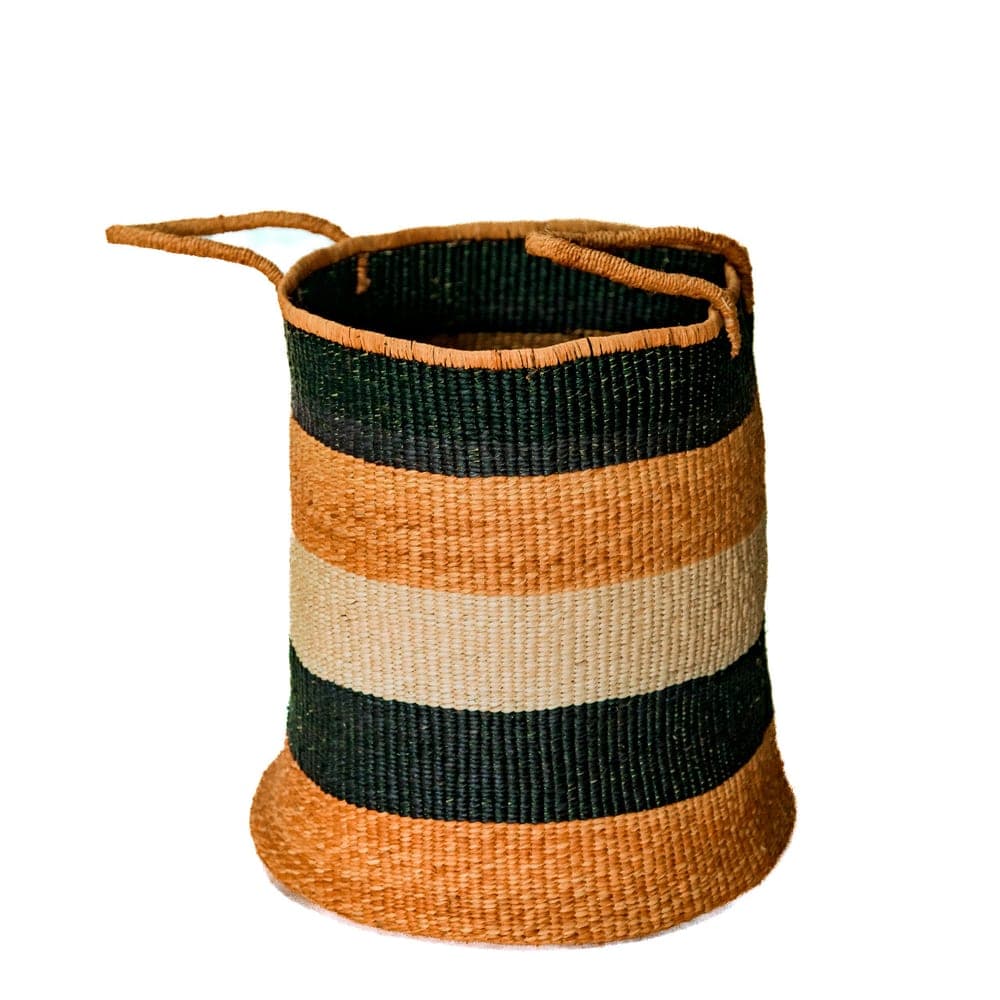
A woven basket is a bundle of dried plant fibre held in tension. It responds to the room the way a wooden instrument does: it takes on moisture, gives it back, and slowly settles into whatever shape you keep it in. Most damage people do to baskets is done with good intentions and water.
Cleaning, in order of how often you should do it
Dust it. A dry soft brush, weekly if it is out in the open. This is ninety per cent of basket care and almost nobody does it.
Vacuum it. Low suction, through a piece of muslin or a screen held over the nozzle so nothing loose gets pulled off. Monthly is plenty.
Wipe it. A barely damp cloth, wrung until it feels almost dry, then an immediate dry cloth behind it. Twice a year at most.
Never submerge it. Soaking swells the core, loosens every stitch as it dries unevenly, and lifts dye out of coloured fibre. A soaked basket rarely comes back.
Light is what actually kills them
Direct sun does two things at once: it bleaches dyed fibre unevenly, and it drives moisture out of the core until the fibres go brittle and start to snap under their own tension. A basket in a south-facing window will visibly fade in a season and become fragile within a couple of years. Bright indirect light is fine, indefinitely.
Humidity, and the mould question
Natural fibre wants somewhere between forty and sixty per cent relative humidity — roughly what a comfortable living room is. Below that it embrittles. Above it, and especially with poor airflow, you get mould. If you find a musty smell or grey bloom, take the basket outside on a dry day, brush the surface off in the open air rather than indoors, and let it sit in shade with air moving round it. Do not seal a damp basket in plastic, which is how a small problem becomes a total one.
Reshaping a basket that has gone out of true
A basket that has flattened on one side can usually be persuaded back. Introduce moisture slowly — a lightly steamy bathroom for an hour, not a spray bottle — then pack the inside firmly with soft cloth to hold the shape you want and leave it somewhere with moving air for a day or two. Fibre has a long memory and a short attention span; it will hold the new shape if you give it time to dry into it.
Storage
Store baskets upright and unstacked, or the ones underneath deform permanently.
Use cotton or paper, never plastic, if you must cover them.
Keep them off concrete floors, which wick moisture upward all year round.
Baskets are not fragile. They are just honest — they show you exactly how they have been kept.
Using them, which you should
Baskets are objects made to hold things and they do better in use than in a display cabinet — handling redistributes stress and keeps the fibre supple. There are only three real restrictions.
Nothing wet, unlined. Fruit, bread and anything that sweats will stain the interior and eventually rot the core. Use a cotton liner, not plastic.
Nothing heavy and sharp. Point loads push individual stitches out of line permanently.
Not as a permanent plant pot. Even with a liner, the humidity gradient is relentless. Drop the plant in for a photograph and take it out afterwards.
Dye that runs
Naturally dyed sisal can transfer colour when damp, particularly the darks. Before a coloured basket goes anywhere near a light-coloured surface it cares about, press a damp white cloth against the dyed area for a few seconds and look. If colour comes off, keep it away from painted shelves and upholstery, and never damp-wipe it at all.
Repairs worth attempting
A loose end poking out. Do not pull it. Thread it back along the coil with a blunt needle and leave it.
A single broken stitch. Stabilise it with a matching fibre or a fine linen thread in the same colour before the neighbouring stitches take up the slack and distort.
A separating rim. This is the one to take to someone who weaves. A rim comes apart because the tension behind it has gone, and stitching the visible symptom will not hold.
What a hundred years looks like
Well-kept baskets in museum collections are commonly a century old and still structurally sound. What ages is the colour: the darks warm, the brights soften, and the whole object drifts toward a narrower, gentler range. That is not deterioration. It is the same thing that happens to a good rug, and most people come to prefer it.
More from the journal
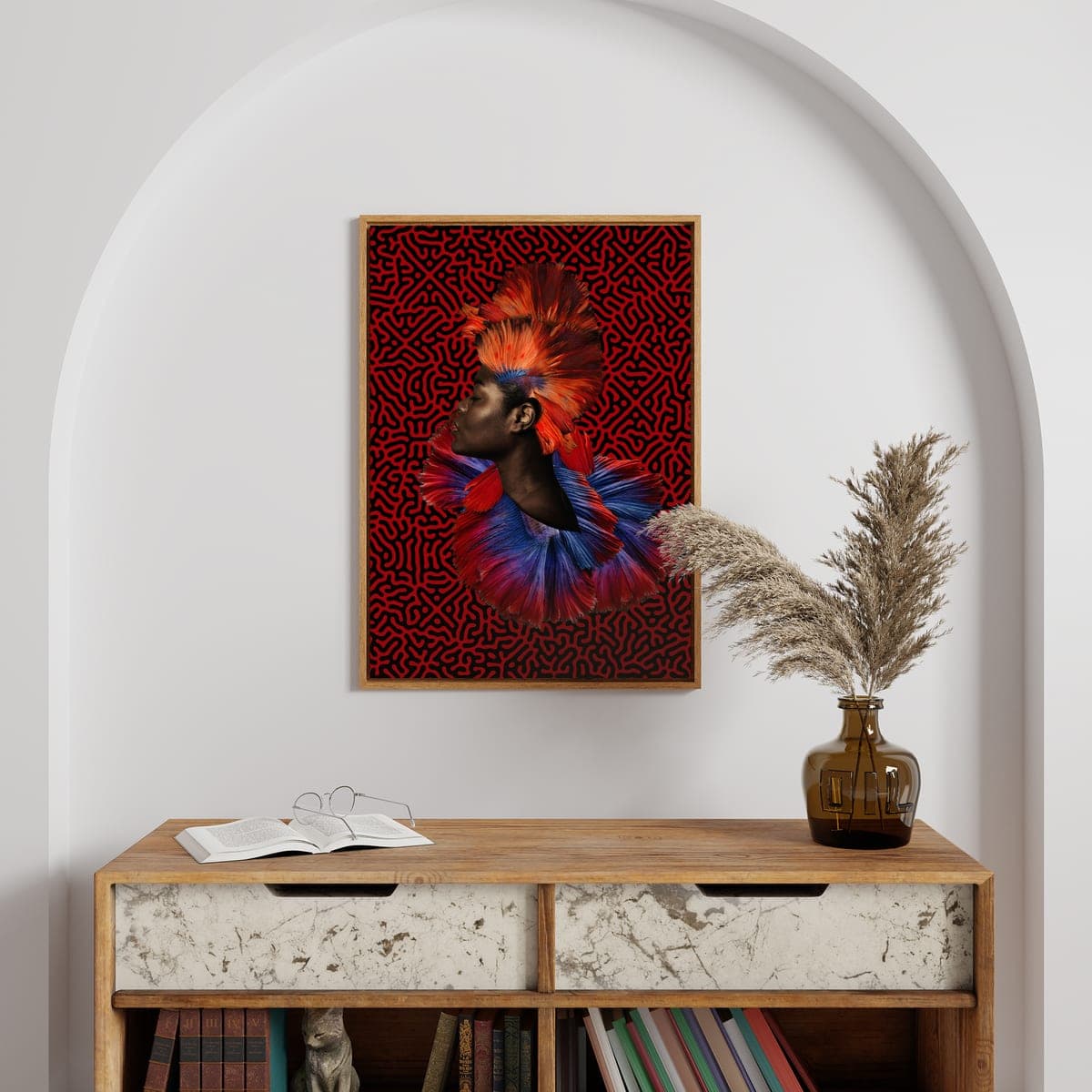
weaving
The weaver who taught forty others
She learned from her mother, then turned a single loom into a cooperative that now supplies half the studio.
1 min read
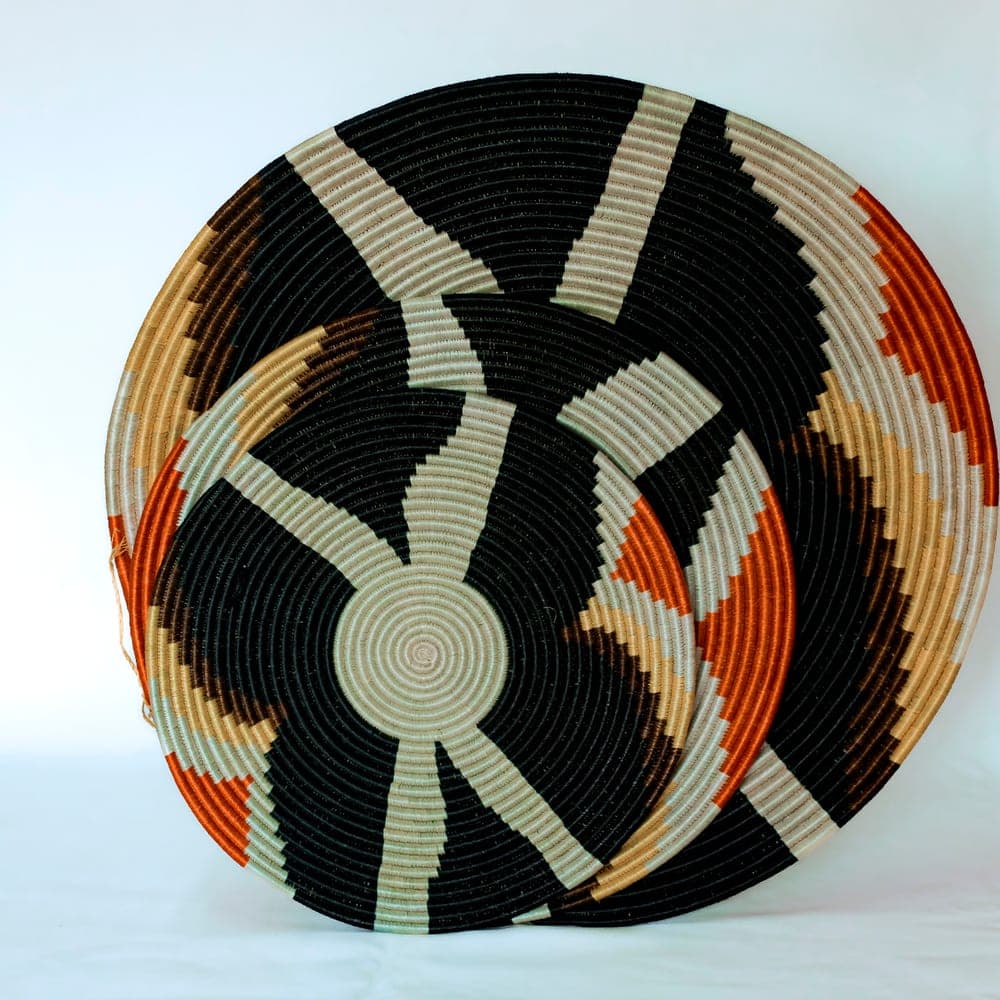
agaseke
Agaseke: what the peace basket actually means
The lidded, cone-topped basket that became a national symbol — what it was for, why it is given rather than bought, and how to tell a careful one from a quick one.
4 min read
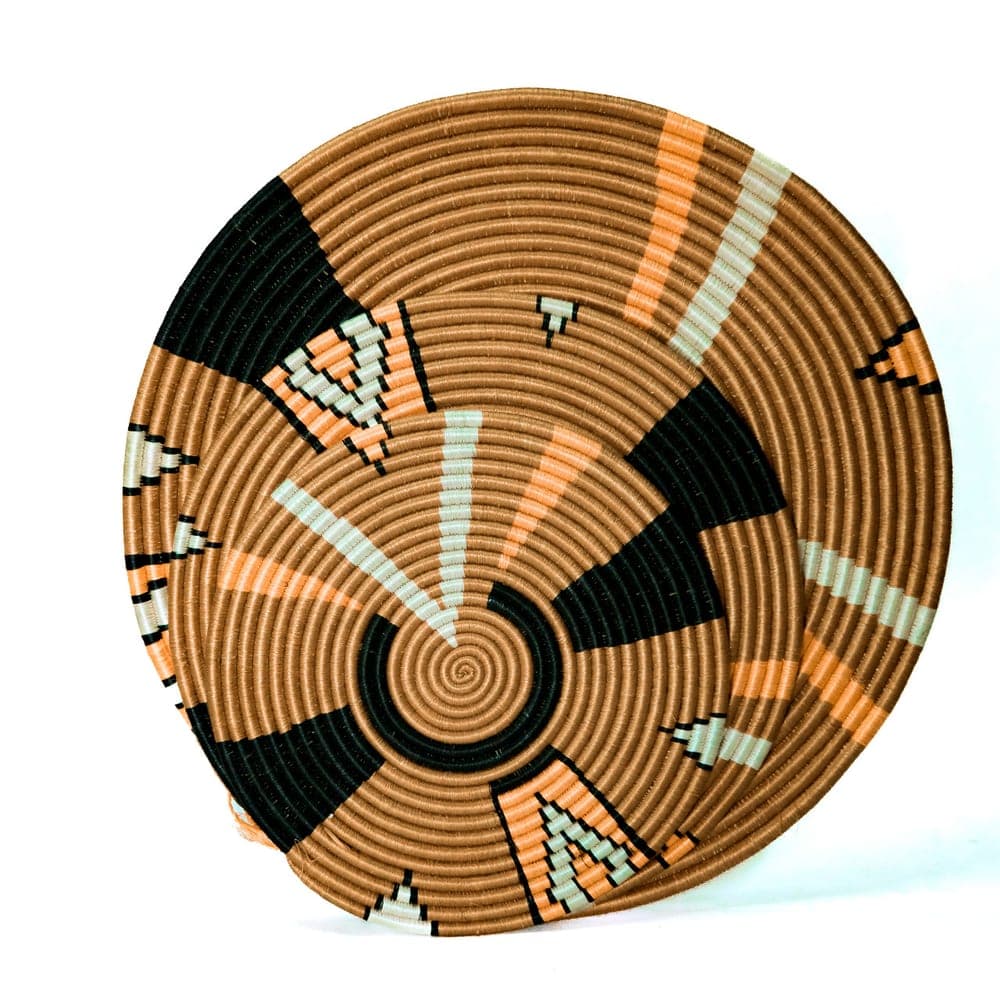
care guide
Caring for textiles and wall hangings
A hanging textile is fighting gravity every day of its life. How to hang it so it does not lose, plus cleaning, moths and long-term storage.
4 min read