dyeing
Where the colour comes from
Before the dye packet there was mud, bark, ash and a long wait. What natural dyeing actually involves, why it fades the way it does, and how to spot it.
A commercial dye is a decision that takes a minute. A natural dye is a decision that takes a season: you have to know which plant, at what point in its life, gathered from where, and what to add so the colour stays in the fibre instead of leaving with the first wash.
The three-part problem
Every natural dye is really three things working together. There is the dyestuff — the bark, root, leaf or mineral that carries the colour. There is the mordant — usually a metallic salt, traditionally derived from ash, mud or iron-rich soil, which bonds the colour to the fibre. And there is the fibre itself, which decides how much of any of it will take. The same dye bath over sisal, cotton and wool produces three different colours, and a dyer who does not account for that will get one right and two wrong.
Why mordants matter more than the plant
Change nothing but the mordant and a single dye bath will give you yellow, olive, grey-green or near-black. Iron saddens and darkens; alum brightens and clarifies. This is why two weavers using the same plant from the same hillside can produce completely different palettes, and why a dyer’s recipe is genuinely proprietary knowledge rather than a list of ingredients.
The common sources
Ash and charcoal — black and grey. The oldest, cheapest and most reliable dark in the region, and the one used in imigongo.
Iron-rich mud — deep browns and blacks, and a slow darkening effect on anything already dyed.
Ochre and laterite clays — the whole red-brown range, straight out of the ground and remarkably lightfast.
Kaolin — the white that is not bleach. It sits on the fibre rather than staining it, which is why it reads as chalky rather than bright.
Bark, root and leaf — yellows, tans and the greens. The least stable family, and the reason old textiles are so often warmer than they started.
How natural dye ages
This is the part worth understanding before you buy. Natural dyes do not hold their colour the way synthetics do — but they lose it differently, and more agreeably. A synthetic red that fades tends to go patchy and slightly wrong, because the pigment breaks down unevenly. A plant-dyed piece softens across the whole surface at once, and usually toward warmth. Twenty-year-old naturally dyed fibre looks aged. Twenty-year-old cheap synthetic looks damaged.
You are not buying a colour that will never move. You are buying one that will move gracefully.
Telling them apart
Look at the consistency along a single strand. Natural dye is almost never perfectly even — you will see slight variation over the length of a fibre, and between fibres dyed in different batches, because a dye bath exhausts as it works. Perfectly uniform colour across a large piece of hand-spun fibre is a strong sign of a commercial dye, which is not a fault, only a fact. Many of the best workshops now use both: natural where the colour and the tradition matter, synthetic where a client needs a specific shade to survive a sunny room.
The process, start to finish
Scour. The fibre is washed to remove waxes and field dirt. Skip this and the dye takes unevenly in patches that no amount of later work will correct.
Mordant. The fibre is simmered with the metallic salt so it can bond with the colour. This is a separate bath and it can be done days or weeks ahead.
Extract. The dyestuff is simmered — sometimes for hours, sometimes fermented over days — to draw the colour into water.
Dye. The mordanted fibre goes in, usually below a boil. Heat that is too high dulls most plant colours and destroys a few outright.
Rinse and cure. Then dry in shade. Sun at this stage undoes a good deal of what the previous four steps achieved.
Why the second batch never matches the first
A dye bath exhausts as it works: the first skein takes up the most pigment and each subsequent one gets less. Dyers use this deliberately to build a graded range from a single bath, and it is why hand-dyed fibre is bought by the lot rather than by the colour name. It is also why a weaver planning a large piece dyes all the fibre for it at once — running out halfway means a visible seam that no skill can hide.
Seasonality is real
Bark stripped in the wet season yields differently from bark stripped at the end of the dry. Leaves gathered before flowering give more than leaves gathered after. A dyer working with a plant they have known for twenty years is largely working with that calendar, which is knowledge that does not transfer from a book.
Living with naturally dyed pieces
Keep them out of direct sun. Not because they are fragile, but because uneven light produces uneven fading, and unevenness is what reads as damage.
Wash rarely, and cold. Heat and alkalinity both shift plant colours. A pH-neutral soap or none at all.
Expect movement. Some greens drift toward yellow within a year as the blue component fades faster. This is normal and was normal in 1850 too.
A natural dye is a living record of one plant, one season and one pot. That is the reason to want it and the reason it will never be repeatable.
More from the journal
banana fibre
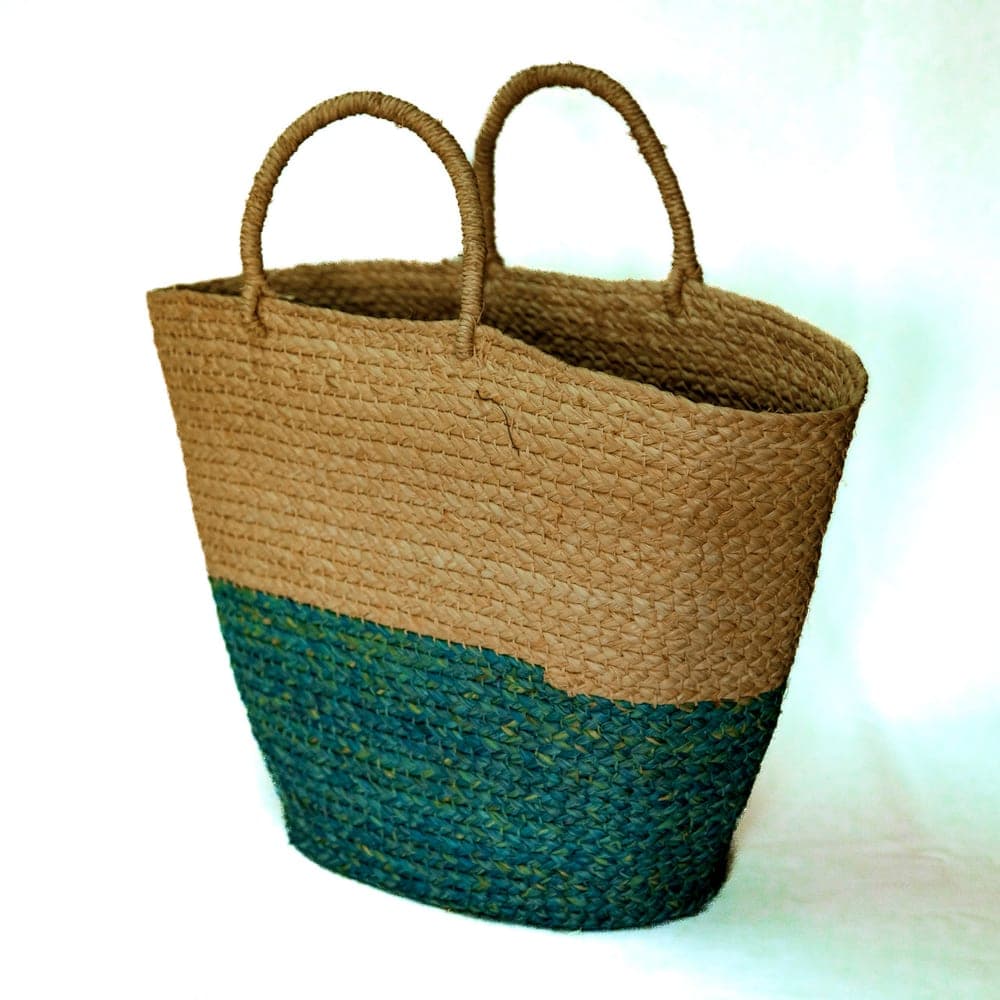
Banana fibre, and what it becomes
The banana plant fruits once and dies. What happens to the stem afterwards is one of the most inventive material traditions in the region.
4 min read
ceramics
Clay, and the potter’s hand
Hand-built pottery leaves evidence everywhere — in the walls, the base, the rim and the fire marks. Learning to read it changes what you buy.
4 min read
imigongo
How imigongo gets its geometry
Ash, clay and ochre worked into ridges by hand. The pattern is settled long before a single line is raised.
2 min read