agaseke
Agaseke: what the peace basket actually means
The lidded, cone-topped basket that became a national symbol — what it was for, why it is given rather than bought, and how to tell a careful one from a quick one.
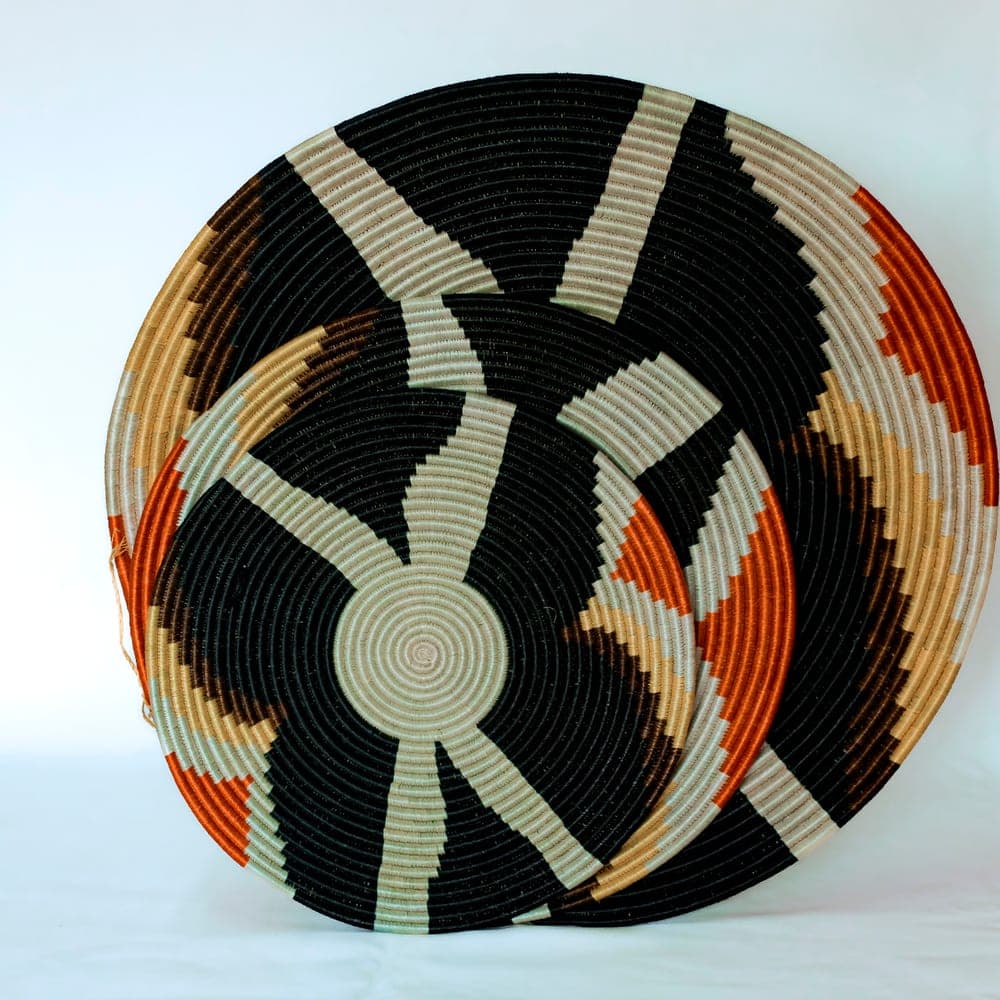
You will see it on the Rwandan coat of arms, on hotel reception desks, and in a hundred airport gift shops: a small basket with a tall conical lid, woven in tight spirals of pale grass with a dark geometric band running round it. It is called agaseke, and almost everything interesting about it is invisible in a photograph.
It was never really a container
Agaseke were made to be given. A woman wove one and filled it — with grain, with beans, with something small and valuable — and it moved between households at moments that mattered: a marriage, a birth, a reconciliation. The basket was the message and the contents were the proof that the message was sincere. That is why the lid matters so much. A closed basket is a secret kept; handing one over is an act of trust.
The association with peace is more recent and quite specific. After 1994, weaving cooperatives became one of the few places where women from opposite sides of the genocide worked side by side, on something slow enough that they had to talk. The baskets paid for school fees and rebuilt houses. The name stuck because it described what was happening in the room, not just what came out of it.
What it is made of
The core is usually a bundle of dried grass or papyrus, wrapped tightly in sisal fibre stripped from the agave leaf. The weaver coils the wrapped core round on itself and stitches each new round to the one below, which is why a finished basket has that fine ribbed spiral running up its side. Colour comes from dyeing the sisal before wrapping — traditionally with plant and mineral dyes, now often with commercial ones that hold up better in sunlight.
How to tell a careful one from a quick one
Count the stitches. Hold the basket at arm’s length and look at the density of the spiral. More stitches per centimetre is more hours, and it is the single clearest signal of care.
Check where the pattern turns. A good weaver keeps a diagonal running true as the circumference changes. A rushed one lets it wobble, or fudges it with an extra round.
Press the lid on. It should sit down cleanly and stay. A lid that rocks means the rim went out of round, usually because the tension slipped near the end.
Look inside. The interior gets less attention on cheap work — loose ends, a visible core, gaps between rounds.
A note on buying one
A well-made agaseke of any size represents days of work, and the price should reflect that. If a large one is very cheap, something has been substituted: a coarser core, fewer stitches, or a weaver who was not paid properly. The last is the only one that should really stop you.
The vocabulary, briefly
Agaseke — the small lidded basket with the conical top. The word is singular; udaseke is the plural.
Inkangara — a larger lidded storage basket, the same technique at a domestic scale.
Imigongo — not a basket at all, but the raised geometric panel work often sold beside them; the two are frequently confused by sellers abroad.
Ubwiza — beauty, and the word weavers reach for when they talk about what separates a good basket from a correct one.
Why the lid is conical
The shape is not decorative in origin. A cone sheds the weight of whatever is stacked on it outward rather than down onto the rim, which matters when baskets are stored nested and piled. It also makes the basket instantly recognisable at a distance, which mattered rather more when it was travelling between households as a message.
Modern makers exaggerate the cone for the tourist market, and there is nothing dishonest in that — but a very tall, very narrow lid is a contemporary aesthetic choice, not an old form.
What you are actually paying for
A 20 cm agaseke of good density is roughly twenty to thirty hours of weaving. Add the sisal harvest, the stripping, the drying and the dyeing, and it is comfortably a week of one person’s work. Cooperative pricing usually reflects that; airport pricing sometimes does not, in both directions.
Ask who wove it. In a cooperative, somebody knows, and being able to tell you is part of what you are paying for.
Giving one
If you are giving an agaseke, the traditional thing is to put something in it. It does not need to be valuable — the gesture is that the basket arrives full rather than empty, because an empty one is a container and a full one is a message. Coffee, salt, seeds and sweets are all perfectly ordinary choices.
More from the journal
weaving
The weaver who taught forty others
She learned from her mother, then turned a single loom into a cooperative that now supplies half the studio.
1 min read
care guide
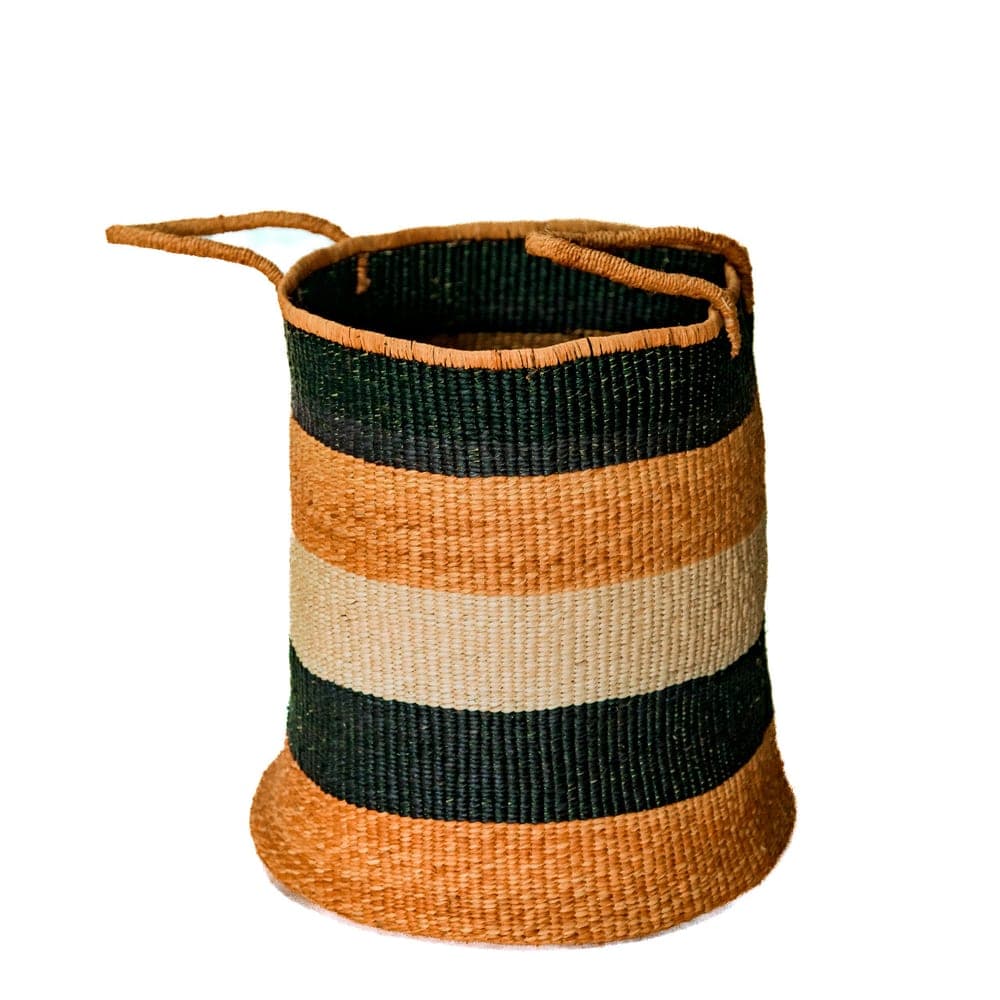
Caring for handwoven baskets
Natural fibre is a material that keeps moving. How to clean a basket without wrecking it, why sunlight is the real enemy, and what to do when one goes out of shape.
4 min read

kigali
A day in Kigali’s art scene
Where the work actually is, how the studio-visit convention works, and why the most interesting rooms in the city are rarely the ones with signs.
4 min read