beadwork
Beadwork, and what it was saying
Across the region, beadwork has carried information as often as decoration — age, status, marriage, mourning. A short guide to reading it, and to buying it well.
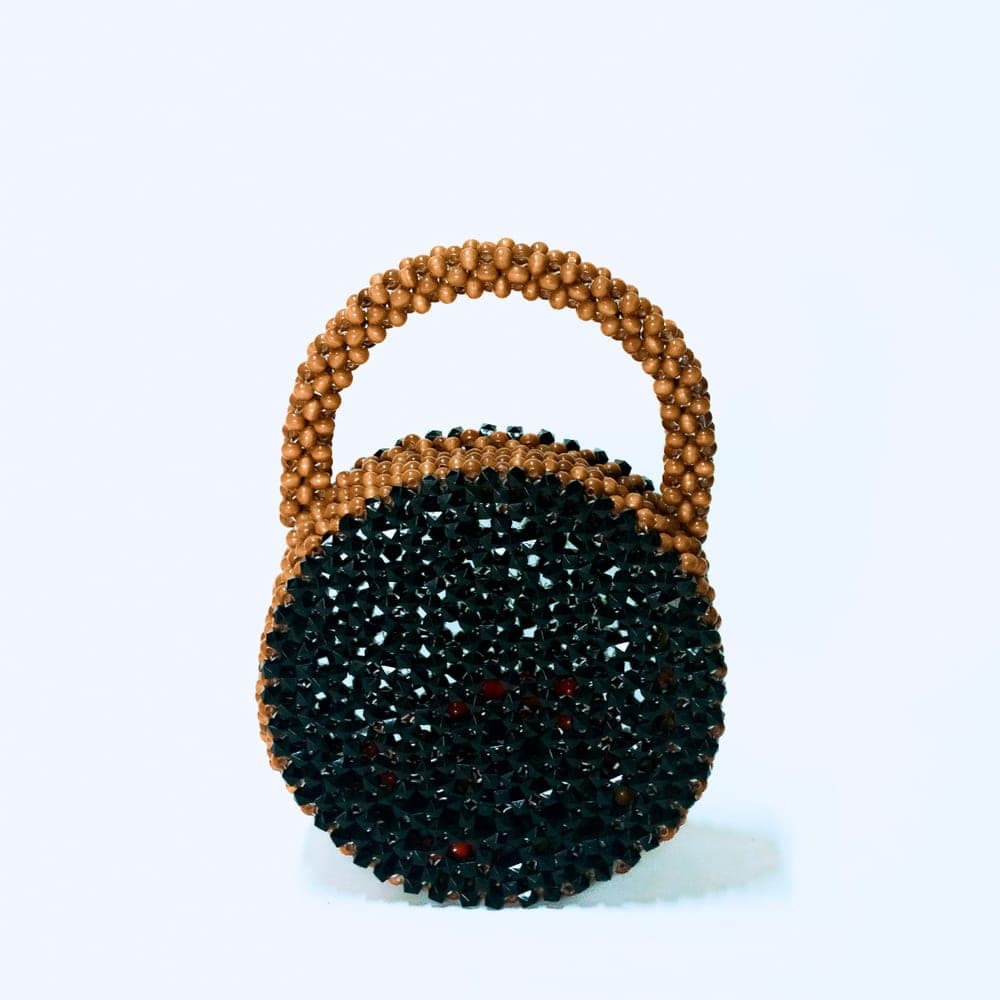
Beadwork is the most portable art there is, and historically the most informative. In much of eastern Africa a person’s beads announced things that would otherwise have to be asked: how old they were, whether they were married, whether they were in mourning, which group they belonged to. The decoration was the least of it.
Colour as vocabulary
The specific meanings vary considerably between communities and it is a mistake to flatten them into one chart — a colour reading that holds among Maasai communities does not simply transfer elsewhere. What is broadly shared is the principle: colour combinations are read, not merely seen, and the arrangement carries as much as the palette. A piece made for a wedding is not a piece made for daily wear with different colours in it; it is structurally a different object.
Ask what a pattern means before you assume it is abstract. Quite often it is a sentence.
How the good pieces are built
Thread matters more than beads. Traditional sinew and modern nylon both work; cheap cotton thread does not, and it is the first thing to fail.
Tension should be even and not tight. Over-tensioned beadwork cannot flex and snaps at the stress points. Slack beadwork sags and abrades.
Look at the closure. It takes all the load and it is where cheap work economises hardest.
Check bead consistency. Hand-sorted glass beads vary slightly, which is fine. Beads varying so much that rows go wavy is a sorting problem, not character.
Old glass, new glass, and recycled glass
Trade beads — Venetian and Bohemian glass that moved along trade routes for centuries — turn up in older pieces and are genuinely collectible in their own right. Contemporary work is more often made with modern seed beads, and increasingly with beads made locally from recycled glass, which have a distinctive slightly irregular surface and a softer colour. None of the three is inherently better; they are different materials with different prices, and a seller should be able to tell you which you are looking at.
Wearing and keeping it
Beadwork is more robust than it looks and is happiest being worn — the oils it picks up are not a problem. What it dislikes is being hung by its most delicate point, being stored in a tangle, and perfume sprayed directly onto it. Lay flat, in a box, with the closure fastened. Restring anything that starts to feel loose before it strands rather than after; hunting for scattered beads on a floor is a lesson everyone learns exactly once.
The main construction techniques
Peyote and brick stitch — beads stitched to each other in an offset lattice with no base fabric. Flexible, dense, and slow; a bracelet is thousands of individual stitches.
Loom work — beads held in straight rows by warp threads. Faster, and recognisable by its perfect grid alignment.
Applique — beads sewn onto leather or cloth. The technique behind most beaded collars and panels.
Strung and spacer work — beads threaded in strands, held apart by spacer bars. The construction most at risk from a single thread failure.
Recycled-glass beads
Increasingly common and worth understanding on their own terms. Glass — often bottles — is ground, coloured, and fired in moulds, which gives beads a slightly frosted surface, small internal bubbles and a softer, less saturated colour than machine-made seed beads. They are heavier, less uniform, and they catch light differently. None of that is a defect; a piece made from them simply has a different presence, and it should not be priced as though it were made from imported glass.
Thread is the whole lifespan
Every beaded object fails at the thread, never at the beads. Modern nylon or polyester beading thread lasts decades; ordinary sewing cotton lasts a few years under tension and then goes without warning. If you cannot see the thread, ask. If a piece is old and you intend to wear it, assume it needs restringing before it needs anything else.
Store flat, fastened, in a box. Hanging puts the whole weight on one point for years.
Put it on last and take it off first. Perfume, lotion and hairspray all degrade thread.
Wipe with a dry soft cloth. Never submerge — the thread and any leather backing will not thank you.
Restring at the first sign of slack, not after the first bead escapes.
Beadwork is the most wearable thing in any collection, and wearing it is what it was made for. Just replace the thread before it asks you to.
More from the journal

kigali
A day in Kigali’s art scene
Where the work actually is, how the studio-visit convention works, and why the most interesting rooms in the city are rarely the ones with signs.
4 min read
agaseke
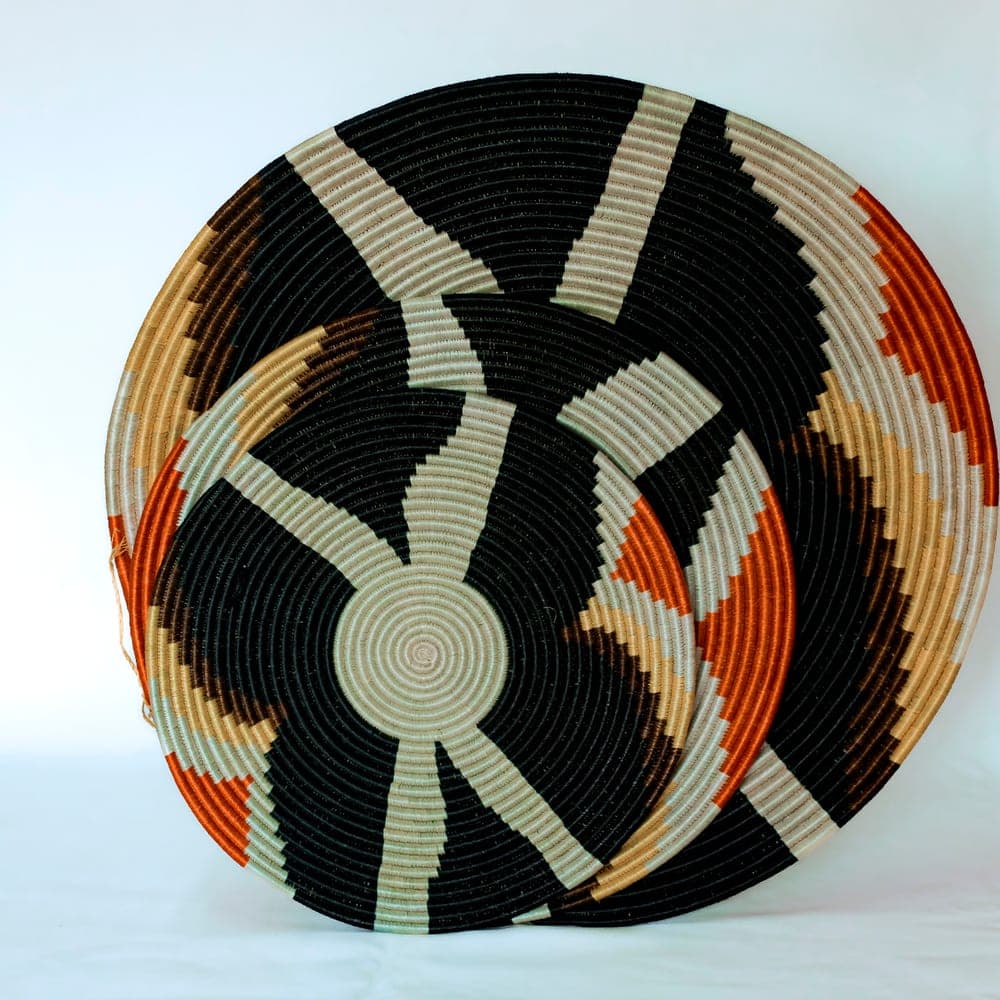
Agaseke: what the peace basket actually means
The lidded, cone-topped basket that became a national symbol — what it was for, why it is given rather than bought, and how to tell a careful one from a quick one.
4 min read