banana fibre
Banana fibre, and what it becomes
The banana plant fruits once and dies. What happens to the stem afterwards is one of the most inventive material traditions in the region.
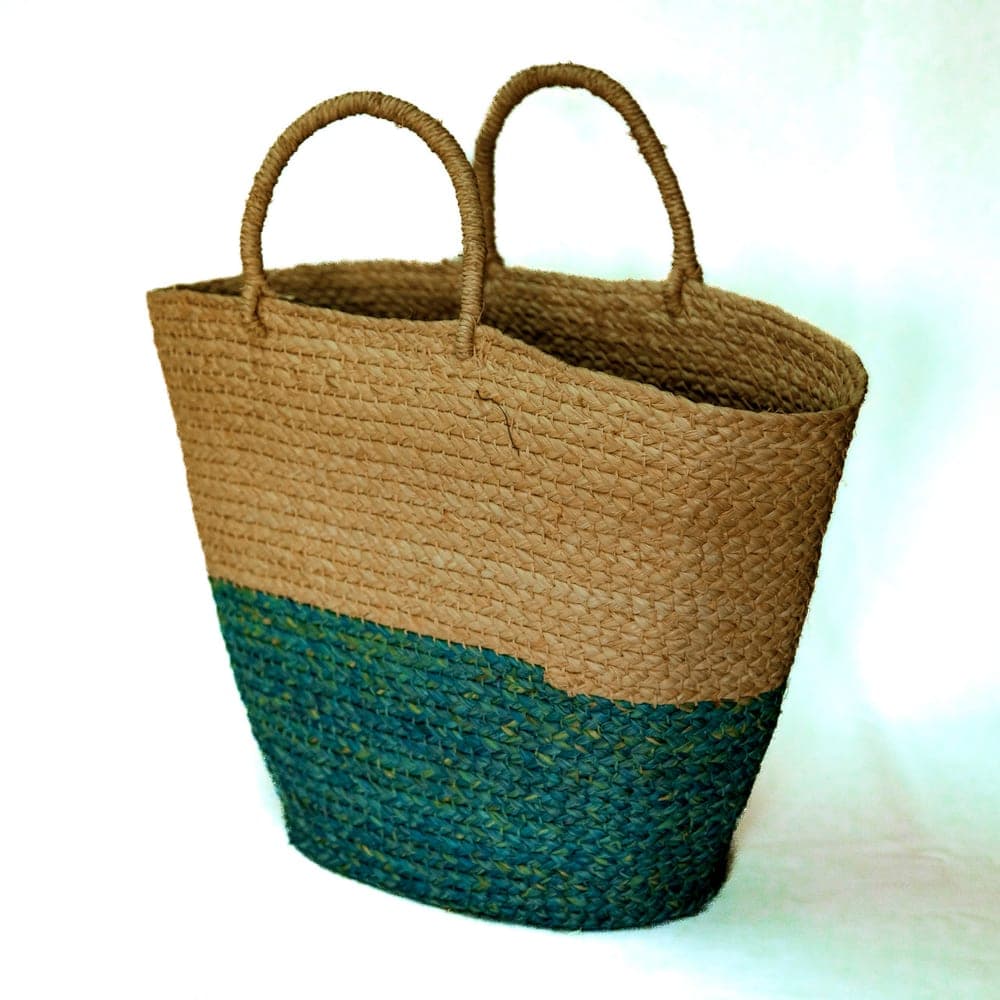
A banana plant is technically a very large herb, and it has an unusual life: it grows for a year or more, fruits exactly once, and then the whole pseudostem dies back. In a country with as many banana plantations as Rwanda, that means an enormous, continuous supply of a material that costs nothing and would otherwise rot where it fell.
From stem to fibre
Cut and separate. The pseudostem is not a trunk but a tight roll of leaf sheaths. Each layer peels off whole, and each layer has a different character — outer sheaths are coarse and dark, inner ones pale and fine.
Strip. The sheath is scraped against a blade to remove the wet pulp, leaving long parallel fibres behind. This is wet, heavy work and it has to happen soon after cutting.
Dry. In shade, not sun. Sun-dried banana fibre goes brittle and bleaches to a uniform straw colour, which throws away the range of natural tones that make the material interesting.
Sort. By width, length and shade. A mosaic artist may work with six or seven distinct natural tones, none of them dyed.
What it is good for
Banana fibre is strong along its length and weak across it, which decides everything about how it gets used. It makes excellent cordage, good flat weaving, and — most distinctively — extraordinary mosaic work, where thin strips are cut and laid side by side to build up an image entirely out of the natural colour range of the plant. The best of these read as sepia photographs from across a room and as pure material up close.
Why the tone range is the whole point
An artist working in banana fibre is essentially painting with a palette they cannot mix. The darks come from the outer sheaths and from fibre left to cure longer; the lights come from the innermost layers. Getting a smooth gradient across a face or a sky means sorting through a great deal of material to find the intermediate tones, which is why a large mosaic represents far more sorting than sticking.
Living with it
Keep it out of direct sun. The tonal range is exactly what fades, and once it flattens the image goes with it.
Frame flat work behind glass. Banana fibre mosaics collect dust in every seam and cannot be cleaned once they do.
Do not damp-wipe it. The fibre swells and the adhesive under it usually does not.
It is a material with no cost and enormous labour in it. Almost everything you are paying for is somebody’s time and eye.
Reading a banana-fibre mosaic
Get close to one and the illusion resolves into strips. What to look at:
Strip width consistency. Fine work runs 1–3 mm; coarse work three times that. Narrower strips mean more of them and a smoother tonal gradient.
Direction. Skilled makers change the lay of the fibre to describe form — strips following the curve of a cheek, or radiating from a light source. Uniform direction across a whole image is a shortcut.
Edges. Where two tones meet, look for interleaving rather than a hard butt joint. Interleaving is slower and is what makes a gradient read as continuous.
Adhesive. You should not be able to see any. Yellowed glue bleeding at the seams is a work that will keep yellowing.
Why it fades and what to do
A banana-fibre picture is built entirely out of tonal contrast, with no pigment involved. Ultraviolet light bleaches the darks faster than the lights, so the range compresses from both ends and the image flattens toward a uniform straw. Once it has gone there is nothing to restore — there was never any colour to bring back.
The remedy is entirely preventative: UV-filtering glazing, and never a wall that gets direct sun at any hour. Done properly, these pieces are stable for decades.
The other things it becomes
Beyond mosaics, the same fibre is twisted into cordage strong enough for load-bearing bags, woven flat into mats and placemats, pressed into handmade paper and cards, and — increasingly — spun and blended into textile yarn. The material is one of the more genuinely circular in the region: it is a waste stream from a food crop that would otherwise be burned or left to rot.
The plant fruits once and dies. Everything made from what is left is, in a real sense, free material and paid labour.
More from the journal
dyeing
Where the colour comes from
Before the dye packet there was mud, bark, ash and a long wait. What natural dyeing actually involves, why it fades the way it does, and how to spot it.
4 min read
ceramics
Clay, and the potter’s hand
Hand-built pottery leaves evidence everywhere — in the walls, the base, the rim and the fire marks. Learning to read it changes what you buy.
4 min read
imigongo
How imigongo gets its geometry
Ash, clay and ochre worked into ridges by hand. The pattern is settled long before a single line is raised.
2 min read