ceramics
Clay, and the potter’s hand
Hand-built pottery leaves evidence everywhere — in the walls, the base, the rim and the fire marks. Learning to read it changes what you buy.
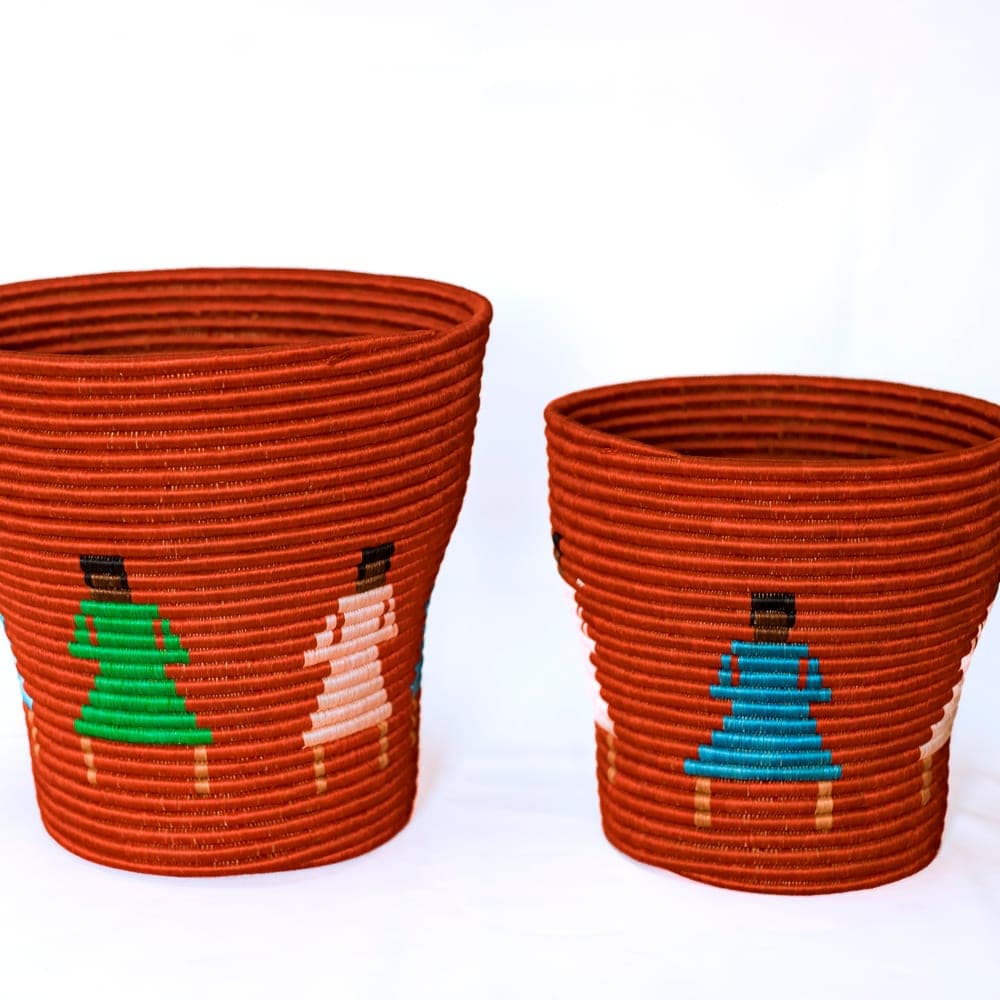
A thrown pot is made by a wheel and a pair of hands agreeing with each other. A hand-built pot is made entirely by decision — coil laid on coil, wall pulled thin by scraping rather than by centrifugal force. The second kind is older, slower, and much more legible: everything the maker did is still visible in the finished object.
Walls
Run a thumb up the inside. On coiled work you will often feel a faint horizontal rhythm where each coil was joined and smoothed — not a ridge, just a change in the surface every centimetre or so. Consistent wall thickness from base to rim is the hard part of hand-building and the clearest evidence of skill. Pots that thicken noticeably toward the bottom were built by someone who ran out of patience before they ran out of clay.
The base
Turn it over. A hand-built base is usually slightly convex or flat with a soft edge; a wheel-thrown one often carries concentric rings and a trimmed foot ring. Neither is better, but they are different traditions and the price should reflect which you are getting. Sand or grog on the base is normal and tells you the piece was fired sitting directly on something.
Fire marks are not defects
Pit-fired and open-fired pottery comes out flashed — patched with black, grey, orange and cream where flame, ash and fuel touched the surface unevenly. Collectors new to it sometimes read this as damage and ask for a "clean" one. That is precisely backwards. A uniformly coloured pit-fired pot is either exceptionally lucky or was finished with something applied afterwards.
Fire marks are the record of one particular fire, on one particular day. They are the closest thing pottery has to a signature.
What it can and cannot do
Low-fired earthenware is porous. It will sweat if you keep water in it for days. That is a property, not a fault, and it is why traditional water vessels keep their contents cool.
Unglazed interiors stain. Beautifully, over years, if you let them. Do not scrub them back.
Thermal shock is the real risk. Never move a piece from cold to hot quickly — no dishwashers, no ovens unless the maker specifically says so.
Wash by hand, dry fully. A porous pot put away damp will grow something.
One test worth doing
Hold a bowl up and tap the rim gently with a fingernail. A well-fired piece rings, briefly. A dull thud usually means either a thick, under-vitrified wall or — occasionally — a hairline crack you have not found yet. It is not conclusive, but it costs nothing and it has saved a lot of people a disappointing purchase.
Coiling, pinching and paddling
Three techniques account for most hand-built work in the region, and they leave different evidence.
Coiling — ropes of clay laid in rings and welded together. Leaves the faint horizontal rhythm inside, and allows the largest vessels.
Pinching — a single ball opened and thinned between fingers and thumb. Limited in size, and the walls carry a subtle facetting from the fingertips.
Paddle and anvil — the wall is thinned and shaped by beating the outside with a paddle against a stone held inside. Produces very even, very thin walls and often a slightly compressed, dense surface.
Burnishing, and why it shines without glaze
Much traditional pottery has a soft lustre and no glaze at all. That comes from burnishing: rubbing the leather-hard surface with a smooth pebble to align the clay platelets flat. It is slow, it must happen in a narrow window before the clay dries too far, and it partially seals the surface — which is why a burnished water vessel sweats less than an unburnished one.
Burnished surfaces are also the most easily damaged thing on a pot. Never scour one, and do not put it in a dishwasher; the detergent will dull it permanently.
Firing temperature decides almost everything
Open and pit firing reaches roughly 600–900°C. Kiln-fired stoneware reaches 1200°C and above. That gap is why one is porous and the other is not, why one can be thermally shocked and the other largely cannot, and why the first has flashing and the second has glaze. Neither is a better pot; they are answers to different questions, and a seller should know which they are selling.
Buying with a use in mind
For water and cut flowers: burnished or glazed interior, or accept that it will weep.
For dry goods and display: anything at all.
For food service: ask directly about the glaze and whether it is food-safe. A responsible maker has an immediate answer.
For the oven or a flame: only if the maker says so explicitly. Most hand-built ware is not made for it.
A pot is the only art object that will tell you what it can do if you simply turn it over and ask.
More from the journal
shipping
Shipping art internationally, without disasters
Packing, paperwork, duties and the questions to ask before you buy from another continent. Most shipping problems are declaration problems.
4 min read
pricing
What handmade actually costs
Where the money goes when you buy a handmade object, why the cheap version is cheap, and what a fair price looks like from the maker’s side.
4 min read

gifting
Giving art as a gift, well
Art is a wonderful gift and a risky one, because taste is not transferable. How to give something that gets hung rather than stored.
3 min read