pricing
What handmade actually costs
Where the money goes when you buy a handmade object, why the cheap version is cheap, and what a fair price looks like from the maker’s side.
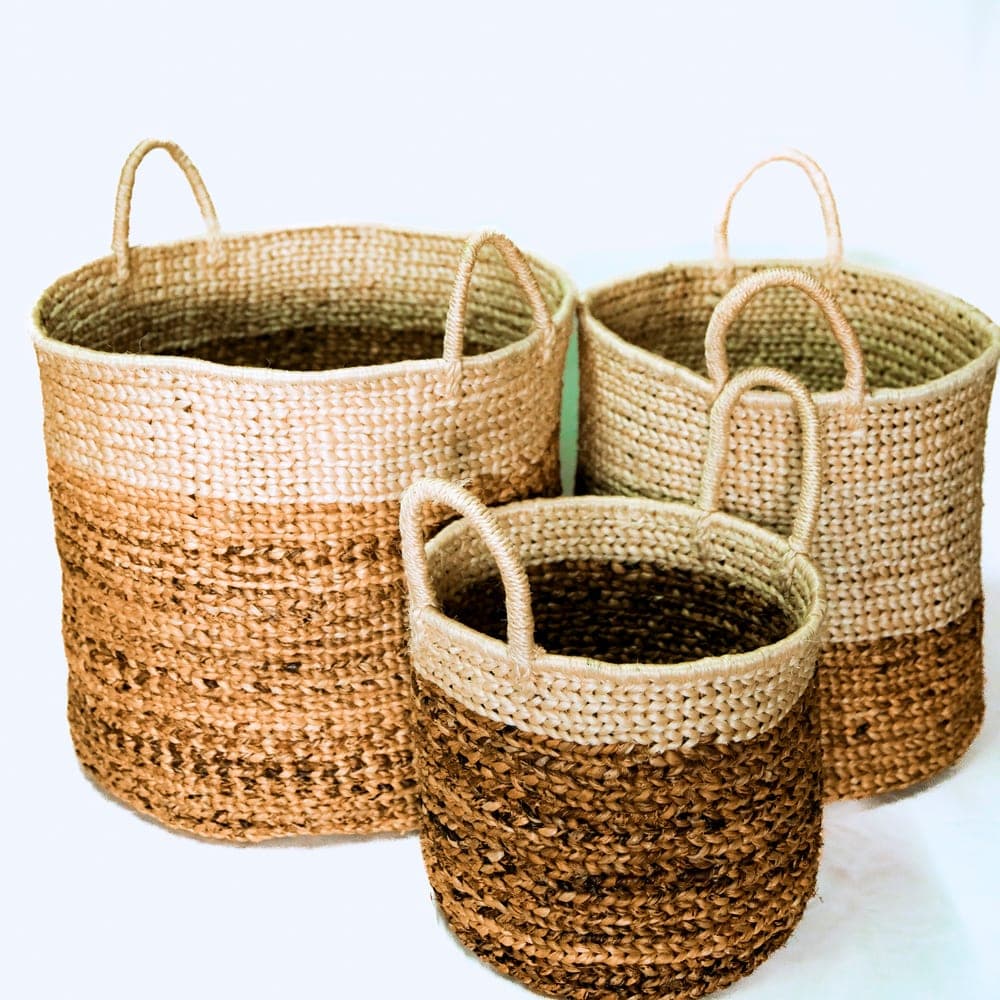
The most common reaction to the price of a genuinely handmade object is that it seems high, and the second most common is that it seems suspiciously low. Both reactions come from the same place: almost nobody knows how many hours are inside the thing they are holding.
Start with the hours
A finely woven lidded basket 25 cm high is somewhere between twenty and forty hours of weaving, before you count gathering, stripping and dyeing the fibre. A hand-built and pit-fired bowl is perhaps four hours of making and then days of drying and a firing that may or may not survive. A mid-sized original painting is rarely under thirty hours once you include the sessions that got painted over.
Put any reasonable hourly figure against those numbers and you will find that the labour alone usually exceeds the retail price of the object. That gap is what the phrase "handmade" is doing in a sentence, and it is why the cheapest version of a traditional craft is almost never cheaper because someone found an efficiency.
What the price is actually carrying
Materials. Often the smallest line, sometimes near zero for gathered fibre.
Direct making hours. The part everyone imagines, and usually less than half the total time.
Preparation. Stripping, drying, sorting, dyeing, stretching, priming. Invisible and unavoidable.
Failure rate. Every pit firing loses pieces. Every dye lot has a bad batch. Successful work carries the cost of the work that did not survive.
Overheads. Studio, kiln fuel, transport to market, packaging, the platform or gallery cut.
And then a margin, which is the only part that is actually the maker’s income.
Why the cheap one is cheap
There are only a handful of ways to make a traditional craft object substantially cheaper, and it is worth knowing which one you are looking at:
Fewer hours in it. Coarser stitching, thinner walls, less finishing. Legitimate, and visible if you know what to check.
Cheaper substitute materials. A synthetic core, a printed pattern instead of a woven one. Also legitimate, if disclosed.
Machine production dressed as craft. Not legitimate, and increasingly common at the airport end of the market.
The maker was paid less. This is the one that should stop you, and it is the one that is never on the label.
If a price seems impossible for the hours visible in the object, it usually is. Someone in the chain is absorbing the difference, and it is rarely the person selling it to you.
What a fair price looks like
A fair price is one where the maker’s share is a number they would say out loud. Platforms and galleries that are comfortable publishing their split are generally the ones worth buying from — not because the number is always generous, but because a business that will state it has already accepted being judged on it.
The other honest signal is repeat work. Makers who are paid properly keep making; the ones who are not move to other work within a season or two. A seller with long relationships and named artists is telling you something a certificate cannot.
A worked example
Take a finely woven lidded basket, 25 cm tall. Thirty hours of weaving. Six hours gathering, stripping and drying sisal. Four hours dyeing across two baths. Materials close to nothing beyond the dyestuff and fuel. That is forty hours before anything is packed.
At a wage most buyers would call fair rather than generous, the labour alone lands well above what a great many baskets retail for. Add the cooperative’s overheads, transport to a market, packaging, and whatever a platform or gallery takes, and the arithmetic only gets harder. When the retail price is lower than that, the gap has been absorbed somewhere — and the weaver is the least powerful party in the chain.
The middle-tier trap
The hardest thing to price is competent, unspectacular work. The cheapest tier competes on volume and the top tier competes on reputation, but a solid, honest, mid-range object has no story to lean on and gets squeezed from both directions. This is where most craft actually lives, and it is where buyer attention makes the biggest difference — recognising good work that is not exceptional is what keeps a whole category viable.
Questions that reveal the chain
Who made this, and where? A name and a place, not a region.
How long did it take? A seller close to the maker knows roughly.
What share reaches them? The answer matters less than whether the question is welcome.
Do you buy from them regularly? Repeat relationships are the strongest signal there is.
Can I see something else by the same person? If the answer is no, they may not know who that person was.
Cheap is not the enemy
Quick work honestly described and honestly priced is completely legitimate, and there is a real market for a small, coarse, inexpensive basket. The problem is never a low price by itself — it is a low price presented as though it bought the same hours as a high one. Ask what you are getting, and most sellers will simply tell you.
You cannot fix a supply chain by shopping. You can decline to reward the sellers who will not tell you what is in it.
More from the journal
provenance
Why provenance matters, even for a small piece
Provenance is not a formality for auction houses. It is the difference between an object with a history and an anonymous thing, and it starts with you.
4 min read
shipping
Shipping art internationally, without disasters
Packing, paperwork, duties and the questions to ask before you buy from another continent. Most shipping problems are declaration problems.
4 min read

for artists
How artists price their work
For makers: the three common pricing methods, why undercharging damages more than your income, and how to raise prices without losing everyone.
4 min read